
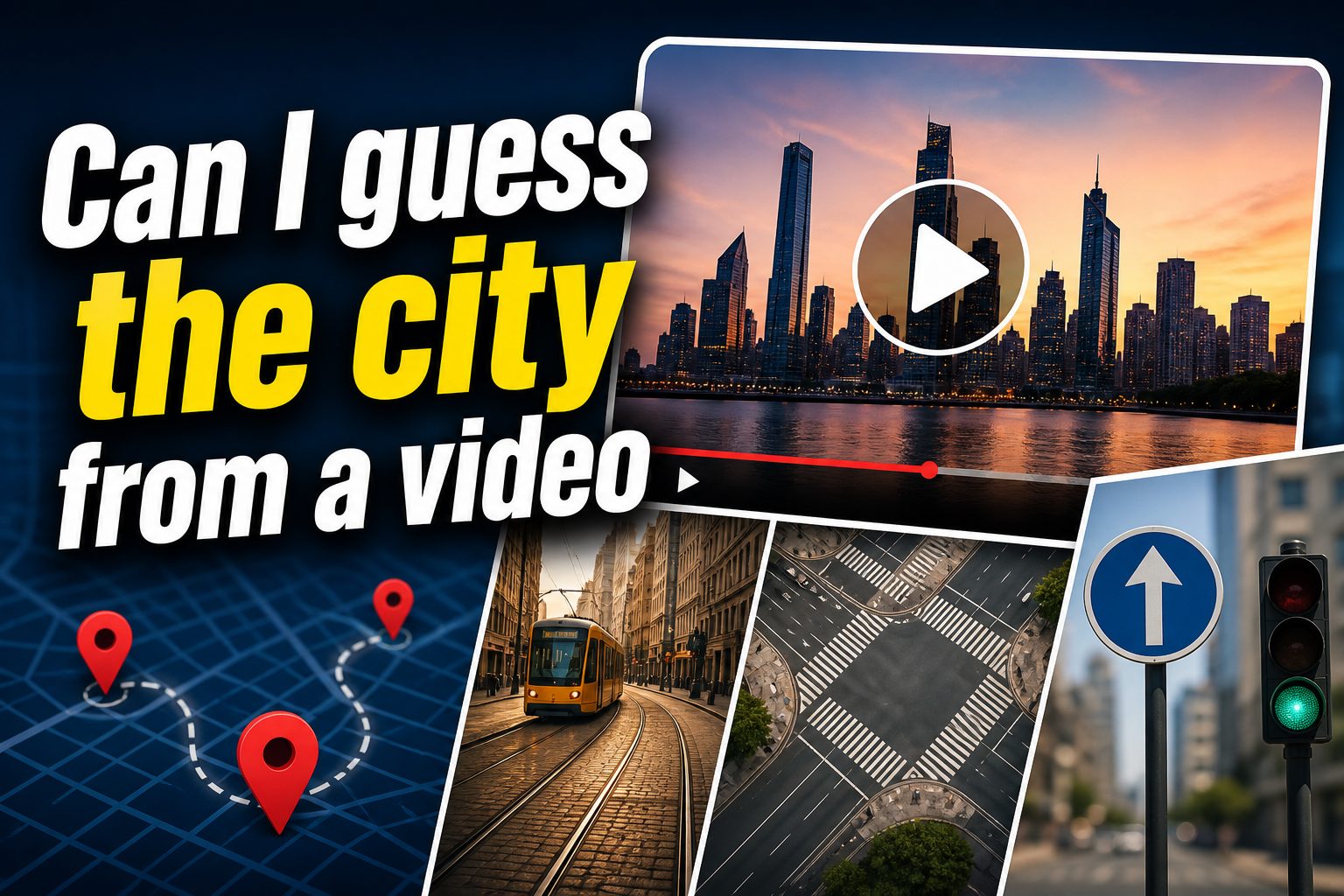
Can I guess the city from a video? Many people ask this when they watch travel clips, street interviews, vlogs, security footage, or short social videos that show just a few seconds of a place. The answer is often yes, but only if you know what details to study and how to connect them. A city can reveal itself through road signs, building styles, weather, language, transport, landmarks, and even small background sounds. That makes video-based city guessing part observation game, part research skill, and part local knowledge. In this guide, you will learn what this practice really means, why it is useful, how to do it step by step, which clues matter most, what mistakes to avoid, and how to improve your accuracy over time. Whether you are curious, competitive, or doing practical research, this article will help you make smarter guesses.
What It Means To Guess The City From A Video
Guessing the city from a video means using visual and audio clues to identify where the footage was recorded. It is similar to location detective work, but it often depends on incomplete information and fast judgment.
Sometimes the answer is obvious because the video includes a famous skyline or a clear street sign. In many cases, though, the clues are indirect and you need to combine several small details before making a reasonable guess.
This skill sits between casual entertainment and practical analysis. Some people do it for fun, while others use it for journalism, travel planning, research, or content verification.
The key point is that one clue rarely solves the puzzle by itself. A useful guess usually comes from patterns, such as language plus road markings plus architecture plus climate.
So when someone asks, “Can I guess the city from a video,” the better answer is this: yes, but only when you approach the video carefully, patiently, and with the right method.
Why Video City Guessing Matters
People often see this as a fun challenge, but it also has real value. Learning how to identify a city from video can improve digital awareness, research habits, and critical thinking.
- Better Observation: It trains you to notice details most viewers ignore, such as bus stop design, lane markings, storefront language, and local traffic habits.
- Stronger Verification Skills: It helps you check whether a video is being described honestly, which matters when clips are shared without context.
- Travel Awareness: It teaches you how cities differ in layout, culture, and public space, making travel content more meaningful and easier to interpret.
- Content Research: Writers, editors, and creators can use location clues to add accuracy when discussing places shown in public footage.
- Problem Solving Practice: It builds a habit of comparing evidence instead of relying on a quick assumption or a single dramatic clue.
Clues That Help You Guess The City From A Video
Most accurate guesses come from stacking clues instead of chasing one answer too early. These are some of the most useful signals to study when trying to identify a city from a video.
1. Street Signs And Written Language
Street names, shop signs, transit notices, billboards, and warning labels are often the fastest route to a solid guess. Even if you cannot read the full text, the alphabet, spelling style, and language mix can narrow the region quickly. A bilingual sign, for example, may point to a specific country or city culture.
2. Road Markings And Traffic Flow
The side of the road cars use, the shape of lane lines, pedestrian crossings, bike lanes, and traffic lights can reveal a lot. Some cities also use very recognizable bus lanes, tram tracks, or curb paint. These details may seem small, but together they can separate one place from another with surprising accuracy.
3. Architecture And Building Age
Buildings tell a story about history, climate, and planning rules. Glass towers, narrow balconies, brick row houses, pastel apartment blocks, and low concrete storefronts each suggest different urban identities. Pay attention to roof shapes, window patterns, and density, because these often reflect a city’s era, wealth level, and weather conditions.
4. Public Transport And Vehicles
Buses, trains, trams, taxis, and even delivery scooters can act like location signatures. Color schemes, route displays, vehicle models, and license plate formats may point to a city or at least a metro area. A tram-heavy scene feels very different from a city built mostly around cars, elevated rail, or minibuses.
5. Weather, Plants, And Light
Palm trees, dry hills, heavy fog, snow piles, and the strength of sunlight all help narrow possibilities. Climate shapes the streetscape more than many people realize. A humid tropical setting looks different from a cool coastal one, and a city with long winter shadows often feels different from one near the equator.
6. Landmarks And Urban Layout
Sometimes the city appears through skyline shapes, bridge design, waterfront patterns, or mountain placement. Even when a famous landmark is not visible, the spacing of blocks, street width, and neighborhood layout may feel distinctive. A compact historic center creates a very different impression from a planned grid with wide modern avenues.
How To Guess The City From A Video
A simple method keeps you from jumping to conclusions. If you follow a repeatable process, your guesses become more accurate and easier to explain.
- Pause On Clear Frames: Stop the video whenever signs, vehicles, storefronts, or skylines appear sharply enough to study. One frozen frame often gives more useful information than watching the clip repeatedly at full speed.
- List Visible Clues: Write down the language, road rules, building style, weather, transport, and any symbol or brand that stands out. A short evidence list keeps your thinking grounded.
- Separate Strong And Weak Signals: A street name is stronger than a vague feeling about the atmosphere. Treat direct evidence as your base and softer impressions as supporting hints only.
- Narrow The Region First: Before picking a city, decide on the likely country or geographic zone. This reduces mistakes caused by visually similar cities in different parts of the world.
- Compare Multiple Clues Together: Ask whether the details fit one location consistently. If the language suggests one place but the transport system suggests another, you may be missing context or seeing a misleading clue.
- Test Two Or Three Candidate Cities: Instead of locking into one answer immediately, compare a few possible cities. This improves judgment and prevents overconfidence.
- Make A Probability Based Guess: In many videos, certainty is impossible. The goal is not perfect proof every time, but the most defensible guess based on the evidence available.
Examples Of Guessing The City From A Video
Examples make the process easier to understand because they show how different kinds of clues work together in real viewing situations.
1. A Dense Street With Double Decker Buses
If a video shows dense traffic, left-side driving, English signs, and red double decker buses, a major clue cluster appears immediately. You would still check whether the road signs, bus branding, and street furniture fit one city rather than assuming too fast, but the evidence strongly narrows the field.
2. A Tram Scene In A Historic Center
A clip with old stone buildings, overhead tram wires, narrow streets, and a central square suggests a city with preserved urban history and strong public transit. The next step would be studying language, route displays, and sign shapes. These details often separate visually similar European cities from each other.
3. A Coastal Video With Hills And Palm Trees
When you see bright sun, steep roads, ocean views, and palm-lined streets, the setting may point toward a warm coastal city. Still, many cities share that feel, so you need backup clues such as road markings, local business names, and the style of public transport to move from atmosphere to evidence.
4. A Night Market With Mixed Languages
Night market footage can be tricky because signs, food stalls, and crowds may look similar across several cities. In that case, details like writing systems, currency symbols, scooter density, awning design, and police uniforms become more important than the general energy of the place.
5. A Residential Area With Little Obvious Context
Some of the hardest videos show only apartment blocks, parked cars, and plain streets. Here, success depends on small clues such as plate shape, curb color, utility poles, trash bins, and the spacing between buildings. This is where disciplined observation matters more than famous landmarks.
6. A Short Social Clip With A Hidden Landmark
In very short videos, a landmark may appear for only one second in the background. If you pause carefully, that one frame can shift the entire guess from broad region to specific city. Many strong guesses come from finding a minor background clue that other viewers completely miss.
Common Can I Guess The City From A Video Mistakes To Avoid
Most wrong guesses happen because people trust one clue too much or move too quickly. Avoiding these errors can improve your results immediately.
1. Relying On One Famous Looking Landmark
A tower, bridge, or skyline feature can look familiar, but similar structures exist in many cities. If you decide too early based on one visual match, you may ignore conflicting evidence. Always confirm landmarks with nearby signs, transport details, or street patterns before treating them as proof.
2. Confusing Country With City
Identifying the country is useful, but it does not automatically reveal the city. Many capitals and regional centers share the same language, road rules, and national branding. To move from country to city, you need more local evidence such as transit style, terrain, or district-specific architecture.
3. Ignoring Audio Clues
Viewers often focus only on the image and forget the soundtrack. Announcements, accents, traffic noise, train chimes, and even street musicians can offer location hints. Audio is rarely enough by itself, but it often strengthens or weakens a visual guess in helpful ways.
4. Overtrusting Personal Memory
It is easy to think a place looks like somewhere you visited, but memory is selective and often shaped by emotion. A confident feeling is not the same as evidence. Use your memory as a lead, not a conclusion, and test it against visible facts from the video.
5. Missing Edited Or Misleading Footage
Some videos combine clips from different places, use filters that change the mood, or crop out important context. If the clues seem inconsistent, consider that the footage may not come from one continuous location. Careful viewers stay alert for editing tricks before making a final guess.
6. Guessing Too Fast For Social Validation
In online challenges, people often rush to answer first instead of answer well. That pressure leads to shallow analysis and repeated mistakes. A slower guess based on six connected clues is far more reliable than a fast guess built on one dramatic impression.
Best Practices For Can I Guess The City From A Video
Once you know the basics, a few practical habits can make your guesses sharper, faster, and easier to defend.
1. Build A Clue First Mindset
Start with observation, not intuition. Train yourself to gather evidence before naming any city at all. This habit protects you from bias and makes the process more systematic. Over time, you will notice that strong guesses come from well-organized clues rather than lucky flashes of recognition.
2. Study Cities In Categories
Instead of trying to memorize every city separately, group them by traits such as coastal, high-rise, tram-based, colonial, desert, or mountain-ringed. Category thinking helps you sort footage faster and compare cities that share similar visual patterns without mixing up unrelated places.
3. Rewatch At Different Speeds
A clip may reveal different information depending on playback speed. Normal speed helps you sense movement and environment, while slow viewing helps you catch signs, uniforms, and vehicle details. Pausing on several frames gives you a fuller picture than relying on one quick pass.
4. Use Negative Evidence Too
Not seeing something can be as useful as seeing it. If a city is famous for a particular feature but the video strongly lacks it in a likely area, that absence may weaken your guess. Negative evidence should not control the whole conclusion, but it helps refine possibilities.
5. Keep Your Confidence Level Honest
There is a big difference between a strong guess, a likely guess, and a complete shot in the dark. Being honest about confidence improves judgment and helps others understand your reasoning. It also reduces the temptation to stretch weak clues into a false sense of certainty.
6. Learn From Wrong Guesses
Every incorrect guess can teach you something about patterns, bias, and overlooked clues. Review why you were wrong. Maybe you misread the language, misunderstood the climate, or overvalued a skyline. That reflection matters more for improvement than celebrating the easy guesses.
Practical Can I Guess The City From A Video Use Cases
This skill is not only a hobby. It appears in several practical settings where location awareness helps people interpret visual content more accurately.
1. Travel Content Analysis
Travel viewers often want to know whether a clip really shows the city claimed in the caption. By checking urban clues, they can better understand the destination, spot misleading edits, and build a more realistic impression of what the place actually looks and feels like.
2. News And Context Checking
When public footage spreads online during major events, people may want to confirm where it was recorded. Careful city guessing can support broader verification work by narrowing the likely location and flagging cases where the claimed city does not match visible evidence.
3. Educational Geography Practice
Teachers, students, and geography fans can use video city guessing to develop observation skills in a more active way. Instead of memorizing place names, learners connect real urban features with regions, climate, infrastructure, and culture, which makes the knowledge easier to retain.
4. Competitive Puzzle And Quiz Games
Many online communities enjoy location guessing as a challenge. Video adds motion, sound, and timing pressure, which makes it more difficult than still images. The skill becomes useful here because success depends on structured reasoning rather than vague familiarity.
5. Content Creation And Script Research
Writers and creators sometimes analyze location clues to describe footage more accurately in articles, commentary, or narration. Even when they cannot prove the exact street, narrowing a clip to the right city improves credibility and prevents careless errors in published content.
6. Personal Curiosity And Cultural Learning
Sometimes the only goal is to understand the world better. Trying to identify a city from everyday video teaches you how local culture appears in transport, architecture, pace, signage, and public behavior. That turns passive viewing into a more thoughtful and informed experience.
Future Trends In Can I Guess The City From A Video
This activity is likely to keep evolving as videos, editing tools, and digital research habits change. A few trends will shape how people approach city guessing in the coming years.
1. Short Form Video Will Increase The Challenge
Very short clips give viewers less context and force faster interpretation. That means future guessing will rely even more on catching micro-details such as one shop sign, one bus number, or one frame of skyline. Attention to detail will matter more than long-form storytelling.
2. Edited Content Will Become Harder To Read
Filters, cuts, and stylized color grading can distort the natural look of a place. As creators produce more polished content, viewers will need to separate aesthetic choices from real location clues. This makes evidence-based guessing more important than impression-based guessing.
3. Audience Knowledge Will Become More Specialized
Communities focused on transport systems, architecture, urban planning, and language patterns are growing. That means video city guessing will benefit from more specialized knowledge. People who study one clue category deeply may become much better at identifying cities than general viewers.
4. Local Details Will Matter More Than Famous Landmarks
As viewers get used to obvious skyline shots, harder challenges will depend on ordinary streets instead of postcard locations. Small everyday details such as bus shelters, crosswalk design, or neighborhood housing style will become the real difference makers in accurate guessing.
5. Verification Habits Will Improve
More people now question where clips come from, especially when videos spread quickly online. This wider awareness encourages a more careful approach to visual evidence. City guessing will increasingly overlap with broader media literacy and content verification habits.
6. Human Judgment Will Still Matter
Even if tools improve, human interpretation remains important because cities contain mixed signals, unusual angles, and incomplete context. People still need to decide which clues are strongest, which are misleading, and how much confidence to place in the final answer.
Frequently Asked Questions
Can I Guess The City From A Video Accurately
Yes, sometimes very accurately, but it depends on the quality of the video and the clues it contains. Clear signs, public transport, architecture, and environmental details can make a strong guess possible. If the clip is short, blurry, or heavily edited, the best result may be only a likely city rather than a certain one.
What Is The Best Clue In A Video For City Guessing
There is no single best clue in every case, but written language and transport details are often the most useful. A street sign, station board, bus style, or license plate format usually gives more reliable direction than a general feeling about the place or weather alone.
Can I Guess The City From A Video Without Landmarks
Yes, and many good guesses happen without famous landmarks at all. Ordinary clues such as road markings, building materials, local business signs, vegetation, and traffic behavior can still narrow the options. In harder cases, success comes from combining several modest clues instead of waiting for one obvious symbol.
Why Do People Make Wrong City Guesses So Often
Most mistakes come from rushing, overconfidence, or relying on one clue that feels familiar. Cities can share similar skylines, climates, or street energy. When viewers fail to cross-check details such as language, transport, and street design, they often land on a confident answer that the full evidence does not support.
Is Guessing A City From A Video Useful Outside Entertainment
Yes, it can support travel research, media literacy, educational geography, and basic content verification. While it is not a substitute for formal investigation, it helps people think more critically about visual information and better judge whether a video’s claimed location seems believable.
How Can I Improve At Guessing The City From A Video
Improve by slowing down, pausing on clear frames, keeping a clue list, and reviewing both correct and incorrect guesses. Study recurring patterns in architecture, transport, and signage across different cities. The more you compare evidence systematically, the faster you recognize which details truly matter.
Conclusion
Guessing the city from a video is possible when you treat it as a structured observation task instead of a quick guess. The strongest results come from combining clues such as language, transport, architecture, road design, climate, and layout. When you use a clear method, compare multiple signals, and avoid common mistakes, your answers become more reliable.
The main idea is simple: a video rarely gives the whole answer in one obvious moment. It usually reveals the city through several small details working together. If you stay patient, watch closely, and keep your confidence level realistic, you can make far better city guesses and understand visual content in a smarter way.